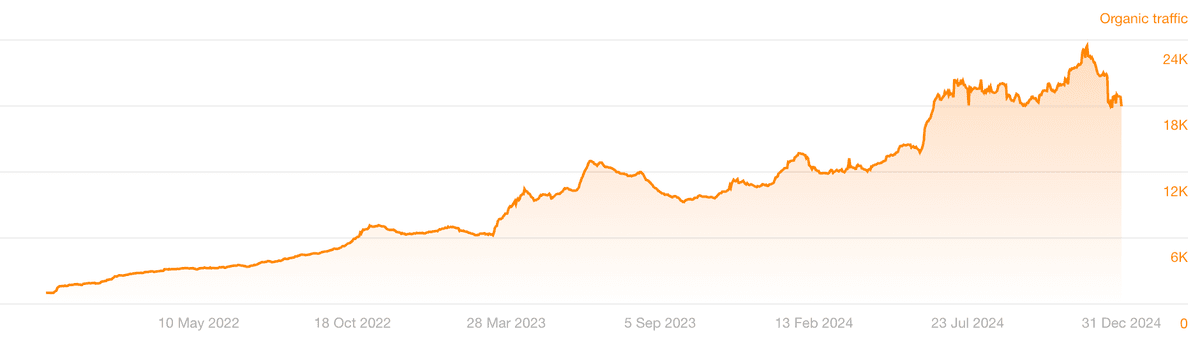
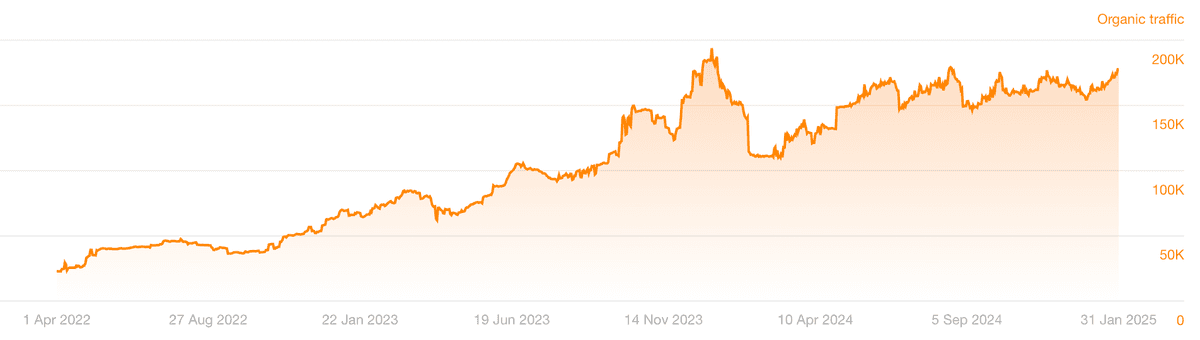
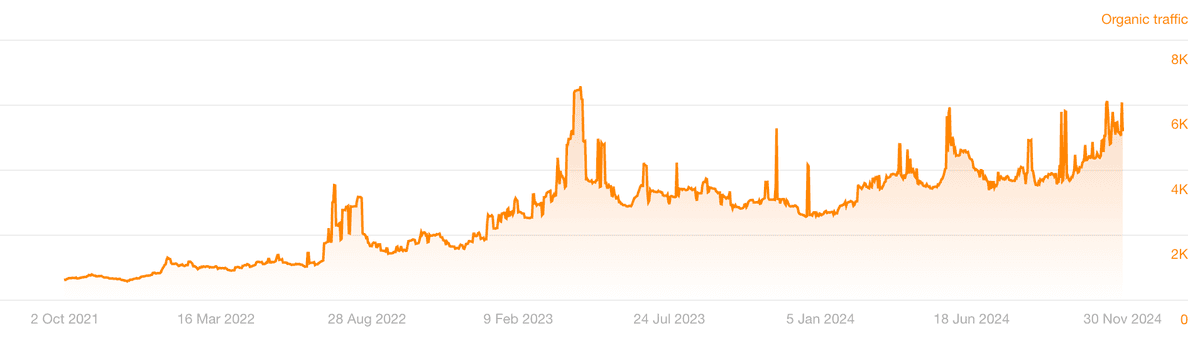
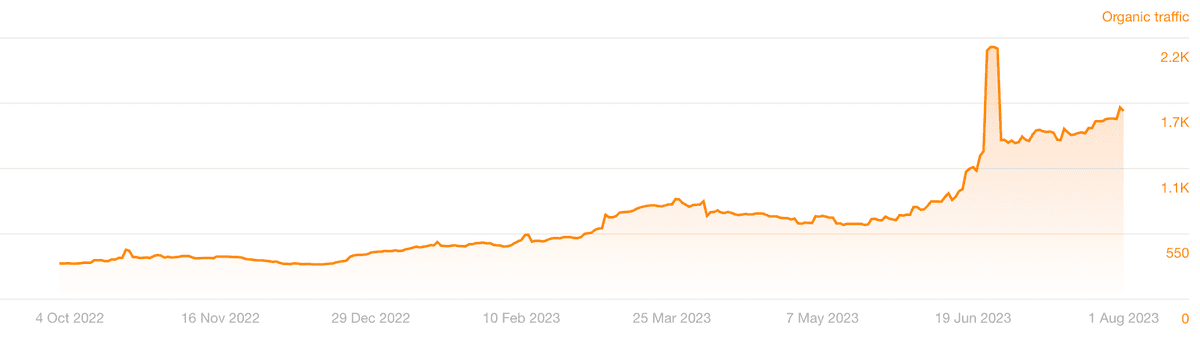
Link building hasn’t disappeared. It has evolved. In 2026, rankings are influenced by more than just domain authority or backlink volume. Search engines analyze:
- Context
- Topical clusters
- Entity associations
- Co-occurrence signals
- Content freshness
- AI citation patterns
In this environment, niche edits (also called link insertions or curated links) have become one of the most powerful — and misunderstood — link-building strategies. When executed strategically, niche edits can:
- Accelerate rankings
- Strengthen topical authority
- Reinforce brand entities
- Improve contextual relevance
- Support AI-driven search visibility
But when done poorly, they look spammy and risky. This guide will walk you through:
- Why niche edits matter in modern SEO
- How niche edits work step-by-step
- The anatomy of a perfect niche edit link
- Advanced SaaS and AI-era considerations
- Common mistakes to avoid
TL;DR
- Niche edits (link insertions) are contextual backlinks placed into existing, indexed, and ranking articles — not new guest posts.
- They leverage aged authority, meaning faster ranking impact compared to publishing new content from scratch.
- Modern SEO values context, topical relevance, and entity associations — niche edits strengthen all three.
- A powerful niche edit has 3 pillars:
- Placement: In-content, inside a relevant paragraph (not footer or author bio).
- Anchor: Mostly branded + natural variation (avoid over-optimized exact match).
- Context: Surrounded by semantically relevant keywords within the right topic cluster.
- Relevance beats raw DR — a tightly aligned DR45 link can outperform a random DR80 link.
- Ideal use cases:
- Boosting commercial SaaS pages
- Supporting mid-funnel rankings
- Strengthening topical authority
- Improving AI-era brand recognition
- Step-by-step process:
- Prospect relevant domains
- Analyze page-level quality
- Plan anchor + context
- Outreach strategically
- Ensure proper placement
- Monitor and track link health
- Common mistakes to avoid:
- Buying bulk marketplace links
- Ignoring page traffic
- Over-optimizing anchors
- Skipping relevance checks
- Not monitoring live status
- Best strategy: Combine niche edits for faster authority leverage and guest posts for long-term brand building.
Table of Contents
What Are Niche Edits?
A niche edit is the process of inserting your backlink into an already published, indexed, and often ranking article on a relevant website.
Instead of creating new content (like a guest post), you place your link within an existing piece of content that:
- Is topically relevant
- Has authority
- Already receives traffic
- Is indexed and aged
Because the page already exists and carries trust, the impact can be faster than publishing new content from scratch.
Niche edits are sometimes called:
- Link insertions
- Curated links
- Contextual placements
But the principle is the same: leverage existing authority instead of building from zero.
Why Niche Edits Matter in SEO Today
1. Authority Transfer from Aged Pages
Older pages often:
- Have backlinks of their own
- Have historical trust
- Have stable rankings
- Have internal link equity flowing through them
When you insert your link into such a page, you tap into an existing authority ecosystem.
New guest posts start from scratch. Niche edits leverage existing authority immediately.
2. Faster Ranking Impact
Since the content is already:
- Indexed
- Crawled frequently
- Trusted by Google
Your link can influence rankings faster.
There’s no waiting period for a new article to:
- Get indexed
- Acquire trust
- Build engagement
This makes niche edits ideal for:
- Boosting specific landing pages
- Supporting high-intent SaaS pages
- Improving rankings for competitive mid-funnel terms
3. Contextual Relevance Signals
Modern search engines evaluate context deeply.
They analyze:
- Surrounding keywords
- Topic alignment
- Semantic similarity
- Entity co-occurrence
A contextual link placed inside a relevant paragraph strengthens:
- Topical authority
- Brand association
- Content credibility
In many cases, a DR45 highly relevant link outperforms a DR80 irrelevant one.
4. AI & LLM Visibility Benefits
In the era of AI search systems like:
- ChatGPT
- Perplexity AI
- Gemini
Search is no longer just keyword-based.
AI systems extract information from:
- High-trust domains
- Context-rich articles
- Structured comparisons
- Topic clusters
When your brand appears naturally inside authoritative contextual content, you increase:
- Entity recognition
- Brand co-occurrence
- Citation probability
Niche edits help position your brand inside already trusted ecosystems — which matters more than ever.
How Niche Edits Work: Step-by-Step Walkthrough
Now let’s get tactical.
Step 1: Prospecting Relevant Domains
The first step is identifying suitable websites.
You should filter based on:
- Topical relevance
- Organic traffic
- Domain authority
- Content quality
- Link profile health
Ideal filters for SaaS brands might include:
- DR 40+
- 1,000+ monthly organic traffic
- Ranking keywords in your niche
- No visible PBN patterns
Avoid:
- Link farms
- Sites selling obvious placements
- Pages overloaded with outbound links
Relevance always beats raw authority.
Step 2: Page-Level Analysis
Not every page on a good domain is good.
Analyze the exact URL where your link would be inserted.
Check:
- Is it indexed?
- Is it ranking?
- Does it have traffic?
- Is it contextually aligned?
- Does it already link to competitors?
If the page ranks for keywords related to your target page, that’s a strong signal.
You’re borrowing authority from a relevant node — not just a domain.
Step 3: Anchor & Context Planning
This is where most SEOs fail.
They treat niche edits as simple link placements.
In reality, anchor strategy is critical.
🔸 Ideal Anchor Distribution
- 40–50% branded anchors
- 20–30% partial match
- 10–20% naked URLs
- Minimal exact match
Over-optimized anchors create unnatural patterns.
Context matters more than anchor aggression.
Instead of: best CRM software for startups
Consider: tools like BrandName CRM
Or: platforms such as BrandName
Natural language wins.
Step 4: Crafting Contextual Integration
A powerful niche edit does not look inserted.
It should:
- Fit naturally within the paragraph
- Improve the content
- Enhance user understanding
- Match the page’s tone
Sometimes you may need to add 1–2 sentences for proper integration.
Never:
- Add a random standalone sentence at the bottom
- Insert inside unrelated sections
- Create obvious “SEO footprint” additions
Step 5: Outreach Strategy
Outreach should feel collaborative, not transactional.
Best practices:
- Personalize emails
- Mention specific sections of their content
- Suggest value improvements
- Avoid spammy language
Instead of: Can you add my link?
Use: I noticed your section on X. We recently published a detailed guide that expands on this. It could add value to your readers — happy to share if useful.
Relationship-based outreach scales better long term.
Step 6: Placement Quality Check (QA)
After placement:
Verify:
- Dofollow status
- Proper anchor text
- Correct URL
- No sponsored tag
- No hidden attributes
Take screenshots.
Log the link in your CRM.
Monitor it periodically.
Step 7: Monitoring & Retention
Many links disappear over time.
Track:
- Link live status
- Indexing
- Traffic impact
- Anchor health
If possible, implement:
- Replacement guarantees
- 6–12 month monitoring
- Link insurance policies
Professional link building is operationally disciplined.
The Anatomy of a Perfect Niche Edit Link
Let’s break this into three pillars: Placement, Anchor, and Context
Placement
Placement determines impact.
Not all backlinks pass equal value — even if they come from the same domain.
Where your link sits on the page influences:
- How much link equity it transfers
- How search engines interpret relevance
- Whether the placement looks editorial or artificial
- How likely users are to click it
In modern SEO, placement is not a cosmetic detail.
It’s a ranking variable.
Ideal Placement
🔸 Within Main Body Content
The strongest placements occur inside the core article content — not in peripheral sections.
When your link appears in the main body:
- It’s treated as editorially significant
- It sits within the primary topical discussion
- It receives stronger contextual reinforcement
Search engines prioritize signals from the main content area over template sections.
🔸 Inside a Relevant Subsection
The link should sit within a subsection directly related to your target page’s topic.
For example:
If your page is about “SaaS attribution software,” the ideal placement would be inside a subsection discussing:
- Attribution models
- Marketing performance tracking
- Conversion analytics
This tight topical alignment strengthens semantic association.
🔸 Embedded Naturally Within a Paragraph
A strong niche edit does not look inserted.
It blends seamlessly into the paragraph, as if it was always meant to be there.
The sentence should:
- Flow naturally
- Maintain tone consistency
- Provide added value to the reader
If the link feels forced, search engines can detect unnatural patterns over time.
🔸 Surrounded by Related Keywords
Search engines analyze the words around your anchor.
The surrounding paragraph should include semantically aligned phrases related to your niche.
For example, if your brand is in analytics, the paragraph might reference:
- Conversion tracking
- ROI measurement
- Campaign performance
- Reporting dashboards
This reinforces topical strength.
The closer your link sits to the core topic discussion, the stronger the signal.
Poor Placement
Not all placements are equal.
Some locations significantly dilute link value.
🔸 Author Bio
Links in author bios are common — and therefore carry less contextual weight.
They are typically:
- Site-wide patterns
- Template-generated
- Weakly associated with the main content
Search engines treat these as lower editorial endorsements.
🔸 Footer Links
Footer links are often:
- Repeated across pages
- Non-contextual
- Template-based
Because they lack topical integration, they pass minimal contextual authority.
🔸 Separate “Resources” or “Partners” Block
A block listing multiple external links reduces:
- Individual link equity
- Editorial intent
- Contextual relevance
When your link appears alongside unrelated links, its signal becomes diluted.
🔸 Random Add-On Sentence
One of the biggest mistakes in niche edits is adding a disconnected sentence at the bottom of the article.
Example: “Also check out BrandName for marketing solutions.”
This looks artificial.
It lacks integration.
It reduces trust.
Search engines are highly capable of detecting these patterns.
The Bottom Line
The best niche edit feels like:
- A natural citation
- A helpful reference
- A value addition
The worst niche edit feels like:
- A paid insertion
- A disconnected promotion
- A forced SEO tactic
Modern algorithms evaluate editorial signals deeply.
Contextual in-content placement is non-negotiable.
Because in today’s SEO landscape, where your link lives determines how much power it carries.
Anchor Strategy
Anchor text is not just a clickable phrase.
It communicates intent, relevance, and relationship between two pages.
In modern SEO, anchor text plays a critical role in how search engines interpret:
- What your page is about
- How it relates to surrounding content
- Whether the link profile looks natural
- How your brand entity is associated within a topic
Search engines no longer evaluate anchors in isolation. They analyze:
- Anchor diversity across your entire backlink profile
- Co-occurring keywords in the surrounding paragraph
- Topical alignment between source and destination
- Historical anchor patterns over time
This means over-optimization is easy to detect.
Why Anchor Diversity Matters
A natural backlink profile typically includes a mix of:
- Branded anchors
- Partial-match anchors
- Naked URLs
- Generic anchors (e.g., “this guide,” “learn more”)
When most of your anchors are exact-match keywords, it creates a footprint.
Algorithmically, this can trigger:
- Devaluation of links
- Ranking suppression
- Reduced trust signals
Modern SEO rewards authenticity over aggression.
What a Strong Anchor Should Do
Your anchor should:
- Reflect natural language – It should sound like something a real writer would include.
- Blend into the sentence – It must feel editorial, not inserted.
- Match contextual tone – Formal content requires formal anchors; conversational content allows flexibility.
- Avoid keyword stuffing – Do not force exact-match phrases unnaturally.
- Support semantic alignment – The anchor and surrounding paragraph should reinforce the same topical theme.
Anchor Strategy in Practice
Instead of forcing: best SaaS link building services
Use variations like:
- “tools like BrandName”
- “link building platforms such as BrandName”
- “solutions designed for SaaS companies”
- “this link building approach”
This builds:
- Contextual association
- Brand reinforcement
- Long-term algorithmic stability
Anchors and Entity Building
A strong anchor strategy does more than help rankings.
It supports entity recognition.
When your brand consistently appears within relevant contextual discussions, search engines associate your brand with:
- A category
- A solution type
- A problem domain
This strengthens your topical authority cluster.
The Bottom Line
Anchor text is not about forcing keywords — it’s about signaling intent naturally.
In modern SEO, over-optimized anchors create risk, while diversified, context-driven anchors build trust. A strong anchor should feel editorial, align semantically with the surrounding content, and reinforce your brand’s topical identity.
Exact-match anchors may give short-term boosts.
Natural anchor profiles build long-term authority.
Because today, anchor strategy isn’t just about ranking for a keyword — it’s about strengthening your entity within a trusted ecosystem.
Context
Context is everything.
In modern SEO, a backlink is not evaluated as a standalone signal. Search engines analyze the environment in which the link exists.
They look beyond the domain metric and assess:
- Surrounding keywords
- Topic clusters
- Semantic similarity
- Content depth
- Internal linking structure
- Overall topical consistency of the page
In simple terms, Google doesn’t just ask, “Is this a strong site?”
It asks, “Does this link make sense here?”
How Search Engines Evaluate Context
When your link is inserted into a page, algorithms evaluate:
- The paragraph around the link
Are the surrounding sentences semantically related to your target page? - The overall topic of the article
Does the page rank for keywords relevant to your niche? - The site’s topical authority
Does the domain consistently publish content in this subject area? - Keyword co-occurrence patterns
Do important related terms appear naturally near the anchor? - Content quality and depth
Is the article comprehensive, or thin and generic?
Context determines whether your backlink strengthens topical authority or simply exists as a weak citation.
Relevance vs Raw Authority
Consider this example:
A SaaS analytics tool placed inside: “How to track marketing ROI effectively”
is significantly stronger than being placed inside: “Top remote work tools”
Even if both pages have similar DR.
Because the first article aligns with:
- Marketing performance tracking
- Data measurement
- ROI analysis
- Analytics workflows
That creates semantic reinforcement.
The second article may be high authority, but it lacks topical precision.
In modern SEO: Relevance > raw authority.
Topic Clusters and Link Ecosystems
Search engines evaluate websites in clusters, not isolated URLs.
When your backlink appears inside a tightly aligned topic cluster, it:
- Strengthens your association with that subject
- Reinforces entity recognition
- Improves thematic consistency
- Supports long-term ranking stability
If your SaaS product helps with analytics, links should appear in:
- Marketing performance guides
- Attribution modeling tutorials
- Data-driven growth articles
- Analytics comparison posts
Each contextual placement compounds authority.
Semantic Alignment Matters More Than Keywords
Modern algorithms rely heavily on semantic understanding.
They don’t just match exact keywords.
They understand related concepts.
For example, an article discussing:
- Attribution models
- Conversion tracking
- Campaign optimization
- Performance dashboards
Is semantically aligned with analytics software — even if your exact keyword is not used repeatedly.
This is why contextual fit often outweighs anchor aggressiveness.
Context Strengthens Entity Building
In the AI era, context helps search systems understand:
- What category your brand belongs to
- What problems you solve
- What topics you are associated with
When your brand appears repeatedly inside relevant discussions, you build:
- Stronger topical authority
- Clearer entity mapping
- Greater citation confidence
AI-driven search systems favor brands that exist naturally inside authoritative conversations.
The Bottom Line
A high-authority but irrelevant link is diluted.
A moderately authoritative but perfectly aligned contextual link can be transformative.
Context is not a minor detail in niche edits.
It is the foundation.
Because in modern SEO, a link is not just a vote.
It’s a semantic relationship.
Niche Edits for SaaS Brands
SaaS companies benefit heavily from niche edits.
Ideal placements include:
- Comparison articles
- Workflow guides
- “Best tools” roundups
- Industry tutorials
- Problem-solution posts
These placements:
- Reinforce brand category association
- Strengthen mid-funnel visibility
- Improve AI citation potential
For SaaS, niche edits help build authority around:
- Product category keywords
- Use case clusters
- Feature-related content
It’s not just link building.
It’s ecosystem positioning.
Niche Edits vs Guest Posts
Guest posts are powerful for:
- Thought leadership
- Brand storytelling
- Content control
Niche edits are powerful for:
- Faster authority leverage
- Contextual integration
- Tactical ranking boosts
The smartest strategy?
Use both strategically.
Common Niche Edit Mistakes
1. Buying Bulk Marketplace Links
Cheap niche edits often come from:
- PBNs
- Link farms
- Overloaded outbound pages
Short-term gains. Long-term risk.
2. Ignoring Page Traffic
Domain-level metrics mean nothing if the page gets zero traffic.
Always analyze URL-level performance.
3. Over-Optimizing Anchors
Exact-match heavy anchor profiles trigger algorithmic scrutiny.
Diversify naturally.
4. Ignoring Topical Relevance
A high-DR irrelevant link provides diluted value.
Stay within topical clusters.
5. Not Monitoring Link Health
Links get removed.
Pages get updated.
Sites get penalized.
Tracking is mandatory.
The Future of Niche Edits
In 2026 and beyond:
- AI will parse context deeper
- Entity recognition will strengthen
- Co-occurrence signals will matter more
- Link spam detection will improve
This means:
Low-quality niche edits will fail faster.
High-quality contextual placements will outperform.
Niche edits are not shortcuts.
They are precision instruments.
Final Thoughts
Niche edits remain one of the most powerful link-building strategies when executed correctly.
They allow you to:
- Leverage existing authority
- Improve contextual relevance
- Accelerate rankings
- Strengthen brand entities
- Support AI-era search visibility
But they require strategy.
They require quality control.
They require contextual intelligence.
In modern SEO, success is no longer about volume.
It’s about precision.
And a perfectly executed niche edit is precision link building at its finest.
FAQ
What are niche edits in SEO?
Niche edits are contextual backlinks inserted into existing, already indexed articles on relevant websites. They are also called link insertions or curated links. Unlike guest posts, niche edits leverage aged content that already has authority, rankings, and traffic.
How do niche edits improve search rankings?
Niche edits improve rankings by transferring authority from established pages to your target page. Because the linking article is already indexed and trusted, search engines process the link faster. The contextual placement also strengthens topical relevance and semantic alignment.
What is the difference between niche edits and guest posts?
Niche edits add a link to existing content, while guest posts involve publishing a new article. Niche edits typically provide faster ranking impact because the page already has authority. Guest posts offer more content control and branding opportunities.
Are niche edits considered white-hat or black-hat SEO?
Niche edits are considered white-hat when placed naturally within relevant, high-quality content. They become risky when purchased in bulk from low-quality sites or inserted with over-optimized anchor text. Quality, relevance, and editorial integrity determine safety.
What makes a high-quality niche edit?
A high-quality niche edit has three elements: in-content placement, natural anchor text, and strong topical relevance. The surrounding paragraph should support the link contextually. The host page should have organic traffic and a clean backlink profile.
Do niche edits work for SaaS websites?
Yes, niche edits are highly effective for SaaS websites. They perform best when placed in comparison guides, product roundups, and workflow-focused articles. These placements reinforce product category association and improve mid-funnel keyword rankings.
How many niche edits are needed to see results?
There is no fixed number. Results depend on competition, existing authority, and link quality. A small number of highly relevant niche edits often outperform a large number of low-quality links.
What anchor text should be used for niche edits?
Branded and partial-match anchors are recommended. Exact-match anchors should be used sparingly. A natural anchor profile improves long-term ranking stability and reduces algorithmic risk.
How fast do niche edits impact SEO?
Niche edits can influence rankings within weeks because the linking page is already indexed and trusted. The timeline depends on competition level, link quality, and overall backlink profile strength.
Do niche edits help with AI search visibility and entity recognition?
Yes. Contextual niche edits strengthen brand co-occurrence within authoritative content. This improves entity recognition and increases the likelihood of being referenced in AI-generated search results.