Encharge Case Study
2,686%
Organic Traffic Growth
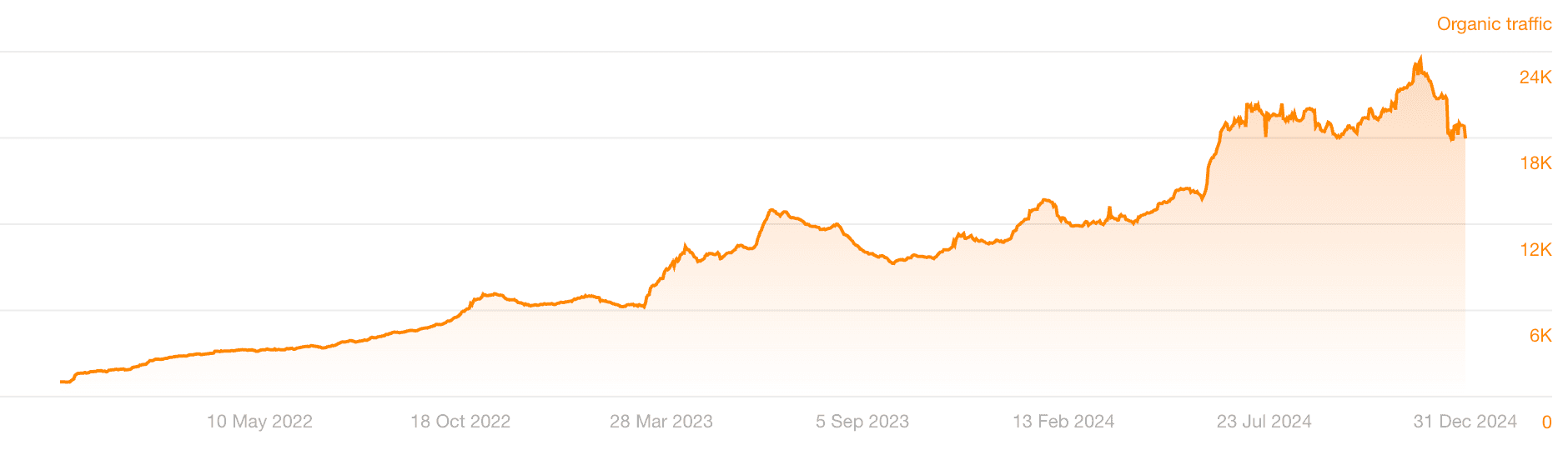
Oct 2021 — Nov 2024 · Organic traffic growth · Data from Ahrefs
Objective
What we set out to achieve
Encharge is a marketing automation platform going up against HubSpot, ActiveCampaign, and Mailchimp. The goal was simple but hard: build enough domain authority through backlinks to get Encharge's product pages, comparison content, and blog posts ranking for the same keywords the incumbents own.
Starting Point
Where Encharge started
When we started, Encharge had about 700 monthly organic visitors. The product was good and the content was well-written, but none of it was ranking. The backlink profile was thin — a few hundred referring domains while competitors had thousands. Without more authority, even the best content wasn't going to break through.
Our Approach
Our playbook for outranking HubSpot and ActiveCampaign
Five tactics, 37 months, one goal: close the authority gap with the big players.
Editorial Link Insertions
We got Encharge linked from existing articles about marketing automation and email marketing that were already ranking. Because these pages already had traffic and authority, the links moved the needle on Encharge's product pages faster than new content would have.
Guest Posting
We placed guest posts on top marketing publications, including HubSpot's blog. A link from HubSpot carries serious weight when you're trying to rank for marketing automation keywords — it's the exact domain Google associates with that topic.
High-Authority Domain Links
G2, HubSpot, Debutify, Venngage — all DR 80+. These were the links that accelerated everything. Encharge's DR went from 12 to 68 over the campaign, and a handful of these high-authority placements did more for that number than dozens of smaller links combined.
Listicle Placements
We got Encharge into "Marketing Automation Tools" and "Email Marketing Tools" roundups that were already ranking on page 1. These listicle placements brought in buyers who were actively comparing products, and each one sent a clear category signal to Google.
Bottom-of-Funnel Targeting
We went after "HubSpot alternatives" pages and other comparison content where people are actively deciding what to buy. These pages convert at a much higher rate than informational content, and getting Encharge listed on them brought in prospects who were ready to switch.
Challenges
Obstacles we overcame
Highly Competitive Niche
HubSpot, ActiveCampaign, Mailchimp — the incumbents in marketing automation have backlink profiles built over a decade. You can't outlink them overnight. We focused on getting placements they didn't have, like niche comparison pages and newer roundups where Encharge's features gave it an edge.
Building Authority From Low Traffic
700 organic visitors a month. That's where Encharge started. At that level, Google barely trusts your content enough to rank it. We front-loaded the campaign with high-DR links to build trust fast — you can't wait 12 months for authority when you're starting from almost zero.
Results
Key takeaways
Oct 2021 — Nov 2024 · Organic traffic growth · Data from Ahrefs
Consistency Compounds Over Time
The biggest traffic gains came in the back half of the campaign. Links 1 through 50 laid the groundwork. Links 100 through 215 are where the compounding kicked in — each new link pushed rankings higher on pages that already had some authority behind them.
Bottom-of-Funnel Content Drives Conversions
The "HubSpot alternatives" and comparison page placements punched above their weight. These visitors weren't browsing — they were comparing tools and ready to sign up. Some of Encharge's best-converting organic traffic came from these pages.
Diverse Link Strategies Reduce Risk
We used editorial insertions, guest posts, listicle placements, and branded links together. The mix matters — a backlink profile that looks natural to Google holds up through algorithm updates. A profile built entirely on one tactic doesn't.