Link Equity: How Backlinks Pass Ranking Power (2026)

TL;DR
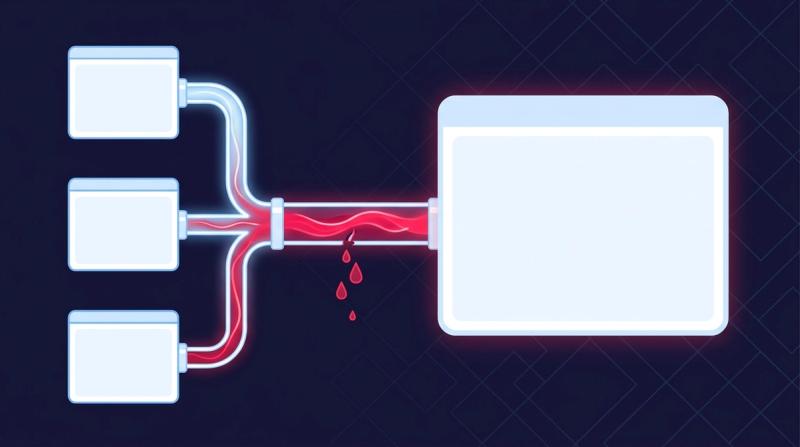
Link equity (also called backlink equity or link juice) is the ranking value one page passes to another through a link. Google still runs a version of PageRank as a core ranking system, so equity is real, but you can't see it directly. How much a backlink passes depends on the linking page's own authority, whether the link is followed, where it sits on the page and how many other links share the page. Most sites lose more equity than they realize: Ahrefs found 66.5% of links pointing at 2 million sampled sites since 2013 have rotted. Before you build new links, run the Equity Path Audit: check the source page, the link, your landing URL and the internal hand-off to your money page.
Free Playbook
The exact 90-day playbook we run for clients

Two backlinks can come from sites with the same Domain Rating and do completely different things for your rankings. One lifts a page from position 14 to position 6. The other does nothing you can measure. The difference is how much equity actually made it from their page to yours.
This guide covers where that value comes from, the points where it leaks away and how to check a link before you pay for it or chase it. If you're new to the topic, our link building guide explains the tactics; this post explains why some links work and others don't.
What Is Link Equity?
Link equity is the ranking value a page passes to another page through a hyperlink. Google uses it as a signal that the linked page is trustworthy and relevant. SEOs also call it backlink equity, SEO equity or link juice. All four names describe the same idea, which grew out of Google's PageRank algorithm.
PageRank came from a 1998 Stanford paper by Sergey Brin and Larry Page, and Google hasn't retired it. Its own ranking systems guide says PageRank "has evolved a lot since then, and it continues to be part of our core ranking systems." What Google stopped doing was showing you the score, so every authority number you see today is a third-party estimate.
Link equity vs PageRank vs Domain Rating
People mix these terms up constantly. Only one of them is something Google actually computes, and nobody outside Google can see it.
Link equity and the metrics people confuse it with
| Term | What it measures | Who calculates it | Does Google use it? |
|---|---|---|---|
| Link equity | Value passed through one link | Nobody directly (it's a concept) | Yes, as part of link analysis |
| PageRank | Importance of a page based on its links | Yes, a core ranking system | |
| Domain Rating (DR) | Strength of a whole site's backlink profile, 0–100 | Ahrefs | No |
| URL Rating (UR) | Strength of one page's backlink profile, 0–100 | Ahrefs | No |
| Page Authority (PA) | Predicted ranking ability of one page, 1–100 | Moz | No |
| Authority Score | Site quality from links and traffic, 0–100 | Semrush | No |
How Link Equity Flows Between Pages
Every page holds some amount of equity and splits it among the links it contains. A page with 10 followed links sends each one a smaller share than a page with 2. Each hop also loses a slice, so equity weakens as it travels from site to site and page to page.
The original PageRank formula models that loss with a damping factor of 0.85. In plain terms, about 15% of the value drops off at every hop. Google's current math is more complicated, but the shape of it holds: a link from a page that sits one click from a strong homepage passes more than one buried five clicks deep. The rule applies inside your own site too, which is why internal links matter as much as the backlinks you build.
And equity doesn't care about intent. A link in a comment thread you forgot about can still pass it, while a link you paid $400 for can pass none because of an attribute you never checked.
What Decides How Much Equity a Backlink Passes in 2026
Four things decide how much a backlink passes: the linking page's own authority, the link's attributes, its position on the page and how many other links share that page. Topical relevance changes how much Google trusts the vote. Domain Rating is only a rough stand-in for the first factor.
How much equity each link type passes (based on Google's public statements; exact weights aren't published)
| Link type | Passes equity? | Notes |
|---|---|---|
| Followed link in body copy | Yes, full share | The standard editorial link |
| rel="nofollow" | Usually not | A hint since March 2020, so Google may count some |
| rel="sponsored" | No | Required for paid placements |
| rel="ugc" | Usually not | Comments and forum posts |
| 301 or 308 redirect | Yes | No PageRank loss since 2016, per Google |
| 302 or 307 redirect | Yes, if left in place | Google treats long-running 302s like 301s |
| Canonical tag | Yes, consolidated | Equity from duplicates flows to the canonical URL |
| Image link | Yes | Alt text acts as the anchor text |
| JavaScript link | Only if rendered as <a href> | Buttons with onclick handlers pass nothing |
| Link on a noindexed page | Fades over time | Google eventually stops crawling the links |
Dofollow, nofollow, sponsored and UGC links
A plain link with no rel attribute passes equity; people call it dofollow, although that attribute doesn't exist. Google announced in September 2019 that nofollow, sponsored and ugc would become hints from March 1, 2020. So a nofollow link now passes nothing by default, but Google can choose to count it.
Don't write off nofollow links from big sites. They still send traffic and brand mentions, and those count for AI search, which we cover further down. Just don't pay dofollow prices for them. Our guide to high authority backlinks explains how to tell the two apart on sites that mix both.
Link placement and the reasonable surfer model
Not every link on a page gets an equal share. Google's reasonable surfer patent, granted in May 2010, describes weighting links by how likely a reader is to click them. A link in the first paragraph of an article beats one in a footer, a sidebar or a list of 40 author bio links.
That's why sitewide footer links rarely move rankings, even from strong sites. Readers ignore them, so Google gives them little weight.
Outbound link count and dilution
Every extra link on a page shrinks the share your link gets. Nofollowing the others doesn't help: since 2008 Google divides equity across all links on the page, and the nofollowed ones simply waste their share, as Matt Cutts explained when he was head of webspam.
Our rule is blunt: ignore sites with more than 25 outbound links per page. At that point you're buying a link on a link farm that happens to have some real content, and the editorial signal is diluted to nothing.
The Equity Path Audit: Check a Backlink's Value Before You Pay
The Equity Path Audit is a four-checkpoint test that follows a backlink's value from the linking page to the page you want to rank. Equity can leak at the source, at the link, at your landing URL or at the internal hand-off. A link that fails any checkpoint delivers less than its metrics suggest.

Start at the source. Check that the linking page is indexed (search site: plus the exact URL) and that it has referring domains of its own in Ahrefs or Semrush. A new guest post on a DR 70 site starts with close to zero page-level equity, and it only gains some if the site links to it internally.
Next, the link itself. It should be followed, sit in the body copy and share the page with fewer than 25 outbound links. View the page source rather than trusting the publisher's word, because rel attributes get added later more often than you'd think.
Then your landing URL. It has to return a 200 status, load without a redirect chain, point its canonical at itself and carry no noindex tag. We've seen agencies build links to URLs that were redirecting three times. Our quality backlinks checklist covers the page-level checks in more detail.
The hand-off is the checkpoint most teams skip. If the link lands on a blog post, that post needs a contextual internal link to your pricing, product or feature page. Equity that pools on an informational post won't lift a commercial page on its own.
Where Link Equity Leaks on Most Sites
Most equity isn't lost at the link. It leaks after the link is live, as pages get deleted, URLs change and redirects stack up. Ahrefs found that 66.5% of links pointing to 2,062,173 sampled websites since 2013 have rotted, which means the pages or the links no longer exist.
Your own site causes a fair share of that. SAASY LINKS audited 60 SaaS domains in 2026 and found that 18% of their referring domains pointed at URLs that returned a 404 or passed through two or more redirect hops. Product teams rename features, marketing retires old campaign pages, and nobody checks what linked to them.
Redirects themselves aren't the problem. Gary Illyes of Google confirmed in 2016 that "30x redirects don't lose PageRank anymore." Chains are the problem: each hop costs crawl time, and Googlebot follows at most 10 hops before giving up.
Two habits make leaks worse. Nofollowing your own internal links to push equity toward money pages stopped working in 2008; the equity you hold back simply evaporates. And building links only to the homepage raises your Domain Rating without moving the pages that sell, because the homepage rarely hands equity to deep feature pages.
How to Measure Link Equity
You can't measure link equity directly, because Google keeps its PageRank values private. The closest proxies are page-level scores like Ahrefs URL Rating and Moz Page Authority, plus the number of referring domains pointing at the exact URL. Page-level numbers beat site-level ones for this job.
Watch the trend rather than the score. In our campaigns, if a page's UR climbs and its rankings follow within 6 to 10 weeks, equity is arriving. If UR climbs and rankings stay flat, the page probably has a relevance or intent problem that links won't fix. Our post on how to increase domain rating explains why site-level scores lag behind page-level changes.
For the leaks, pull two reports each quarter. Ahrefs' Best by links report filtered to 404 shows pages with backlinks that no longer load. A crawl in Screaming Frog with redirect chains enabled shows every link that takes more than one hop to arrive.
How to Build Link Equity on a SaaS Site in 2026
The cheapest equity on most SaaS sites is equity you already earned and lost. Reclaim broken backlinks with 301 redirects, fix redirect chains, then route that value to money pages with internal links. Only after that does buying or earning new links give you full value for the spend.
One project management SaaS had 41 referring domains pointing at feature pages it had deleted during a redesign. SAASY LINKS 301-redirected those URLs to their live equivalents, and the main features page moved from position 19 to position 7 in five weeks without a single new link.
Internal links come next. Pick the five blog posts with the most referring domains and add a contextual link from each one to the commercial page it supports. Because this moves equity you already have, it's often the fastest ranking lift available.
New links should come from pages that pass all four checkpoints, which in practice means editorial link building on sites your buyers read. It costs more per link than marketplace guest posts. But a link that delivers its full equity is worth several that leak most of it, and that's the math behind our SaaS link building agency work.
Does Link Equity Matter for AI Search in 2026?
Yes, although indirectly. AI assistants like ChatGPT and Perplexity pull sources from search indexes, and pages with more equity rank higher in those indexes. Equity feeds rankings, and rankings feed citations. The OppAlerts study of about 167,000 domains found link and authority signals among the strongest predictors of AI visibility.
One finding stands out for this topic. In the same study, Wikipedia citations were the weakest of 18 signals, correlating at just +0.055 with AI visibility. Wikipedia's outbound links are all nofollow, so they pass no equity either. A famous name on the linking site doesn't count for much if nothing flows through the link.
Frequently Asked Questions
Is link equity the same as link juice?
Yes. Link juice is the informal name for link equity, and backlink equity means the same thing. All three describe the ranking value passed from one page to another through a link.
Do nofollow links pass link equity?
Usually not. Since March 2020, Google treats nofollow as a hint, so it may count some nofollow links, but you shouldn't plan around it. Nofollow links still send referral traffic and brand exposure.
Do 301 redirects pass link equity?
Yes. Google confirmed in 2016 that 301 and other 30x redirects don't lose PageRank. Keep redirects to a single hop, because long chains slow crawling and Googlebot stops after 10 hops.
Do internal links pass link equity?
Yes. Internal links pass equity the same way external links do, and they're the only equity flow you fully control. Link from your most-linked pages to the commercial pages you want to rank.
How many outbound links are too many?
There's no official limit, but each extra link shrinks the share every other link gets. We skip placements on pages with more than 25 outbound links, because the equity left for any one link is close to nothing.
How long does it take for link equity to affect rankings?
In our campaigns, usually 4 to 10 weeks after Google recrawls the linking page. Links on pages that get crawled often, like news sites and popular blogs, tend to show up faster than links on pages Google rarely visits.
Can you lose link equity?
Yes. You lose it when linking pages get deleted, links get removed or nofollowed, or your target URL starts returning a 404. Regular audits for broken backlinks and redirect chains recover most of it.

Written by
Co-founder & CEO of SAASY LINKS, the B2B SaaS link building and AI visibility agency. 10+ years in SEO and growth marketing for SaaS brands. Mentor at 500 Startups and Techstars. Runs the Backlink Masterminds community for link builders.
Get Your SaaS Ranked on Google & Cited by AI
Senior-led AI SEO combining strategy, content, editorial links, and AI optimization in 90-day sprints. Built exclusively for B2B SaaS.
Book a Free Consultation CallBuilt exclusively for SaaS.