How to Get Backlinks to Your Website in 2026

TL;DR
The fastest way to get backlinks depends on your site's stage. New sites should claim the links they already qualify for, like integration partners, SaaS review sites and vendor testimonials, then pitch guest posts, "best X" listicles and podcasts. Once people start mentioning you, reclaim unlinked mentions and lost links. Linkable assets and copying competitors' best links pay off once you reach DR 30 or so. Keep outreach short and send one follow-up: Backlinko's study of 12 million outreach emails found only 8.5% got a reply, and a single follow-up lifted replies by 65.8%. Skip paid link marketplaces, PBNs and bulk directory submissions.
Free Playbook
The exact 90-day playbook we run for clients

Getting backlinks comes down to one question: why would this site link to you? Every tactic that still works in 2026 answers it in its own way, whether that's a partner listing your integration or an editor citing your data. The tactics that fail skip the question and pay for the link instead.
Most advice on how to get backlinks hands you 10 tactics in no particular order. But a site with a Domain Rating of 8 and a site at DR 50 shouldn't start in the same place, which is why our link building guide sorts tactics by stage as well.
How to Get Backlinks: The Short Answer
To get backlinks, give another site a reason to link: a listing you qualify for, a placement they want, a mention they already made or a resource worth citing. New sites should start with the first two because they don't depend on authority. Established sites get the most out of the last two.
12 backlink tactics by Link Ladder rung (hours and win rates are our estimates from past campaigns; yours will vary)
| Tactic | Rung | Best site stage | Hours per link | Typical win rate |
|---|---|---|---|---|
| Integration and partner pages | Claim | Any | 1–2 | 50%+ |
| SaaS directory and review profiles | Claim | Any | 0.5–1 | 90%+ |
| Vendor testimonials and case studies | Claim | Any | 1–2 | 30–50% |
| Guest posts | Pitch | DR 10+ | 6–10 | 10–20% |
| "Best X" listicle placements | Pitch | Any | 3–6 | 5–15% |
| Podcast guest spots | Pitch | Any | 3–5 | 10–20% |
| Journalist requests | Pitch | Any | 1–2 per pitch | 2–5% of pitches |
| Unlinked brand mentions | Reclaim | Once you're mentioned | 0.5–1 | 20–30% |
| Lost and broken links to your site | Reclaim | DR 20+ | 0.5 | 30–50% |
| Competitors' broken links and resource pages | Reclaim | DR 20+ | 3–5 | 5–10% |
| Linkable assets | Earn | DR 30+ | Varies widely | Varies widely |
| Copying competitors' best links | Earn | DR 30+ | 3–6 | 5–10% |
What Makes a Backlink Worth Getting in 2026
A backlink is worth getting when a real site in your market links to a relevant page, inside the body of its content, where readers might actually click. Relevance and placement count for more than Domain Rating alone. In our view, a DR 35 blog your buyers read beats a DR 80 site that publishes anything for a fee.
Some links on this list are nofollow, especially profiles on review sites. They pass less ranking value, and they still put your brand on pages that buyers and AI assistants read. Our breakdown of quality backlinks has the full checklist, including the signs of a link farm dressed up with good metrics.
The Link Ladder: Which Tactics Fit Your Site's Stage
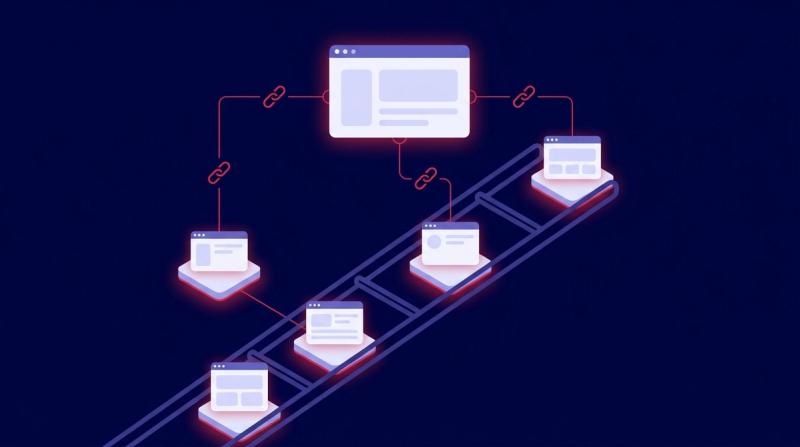
The Link Ladder is SAASY LINKS' four-rung model for picking backlink tactics by site stage. Claim the links you already qualify for, pitch placements next, reclaim mentions once people talk about you, and earn links with assets after you pass DR 30. Each rung costs more effort per link than the one below it.

The simplest way to decide how to get backlinks for your own site is to find the lowest rung you haven't finished. New sites can't skip rungs, because nobody links to an asset from a site they've never heard of. Established SaaS companies make the opposite mistake. It's common to find a DR 60 brand with 40 integration partners and not one link from any of them.
Move up when the current rung runs dry, not on a schedule. If you've claimed every partner link and review profile, pitching comes next. Once you're getting 10 or more brand mentions a month, reclaiming them pays better than cold outreach.
12 Ways to Get Backlinks in 2026
These 12 tactics are grouped by Link Ladder rung, starting with the ones a brand-new site can use this week. Each covers what to do, a realistic result and where it goes wrong. Pick two to four from your current rung rather than running all 12 at once, because half-finished outreach wins nothing.
1. Get Listed on Integration and Partner Pages
If your product integrates with another tool, that tool almost certainly has a partner page or app marketplace. Zapier's app directory has 2,596 referring domains (Ahrefs, September 2026), and every listing on it links back to the app. Email each partner you integrate with and ask for a listing or a mention in their docs. Resellers and agency partners count too. This is the easiest win here because the relationship already exists.
Make the ask easy to say yes to. Send a 50-word blurb, your logo and the exact URL you want linked, so the partner's team can paste it straight into their page. Partnership managers are often judged on how many integrations they promote, and you're doing part of that job for them.
2. Claim SaaS Directory and Review Site Profiles
G2, Capterra, Product Hunt and Crunchbase all have a Domain Rating of 91, according to Ahrefs data we pulled in September 2026. A complete profile takes under an hour. Many of these profile links are nofollow, so don't expect a ranking jump from them alone. You do get your brand onto pages buyers read while comparing tools.
SaaS directories and review sites worth a profile (Ahrefs, September 2026)
| Site | Domain Rating | Est. monthly organic traffic |
|---|---|---|
| Crunchbase | 91 | 3,274,384 |
| G2 | 91 | 627,545 |
| Capterra | 91 | 368,587 |
| Product Hunt | 91 | 257,299 |
| AlternativeTo | 80 | 114,198 |
| TrustRadius | 85 | 47,626 |
| GetApp | 85 | 35,216 |
| SaaSHub | 81 | 5,788 |
Stop at the review sites your buyers actually use. Submitting to 200 generic directories is a different tactic, and it's one to skip. Most of this bottom rung costs nothing but time, and our list of free backlinks has more options that don't need a budget.
3. Offer Testimonials and Case Studies to Your Vendors
Every tool you pay for wants customer proof. Offer a two-line testimonial or agree to a short case study, and ask for a link to your site next to your logo. Vendors say yes because it's free content for them. Start with the tools your team opens every day, since you'll have something specific to say about each one.
Case studies take longer and pay more. A vendor's case study page links to the customer, tends to stay live for years and often gets shared in the vendor's newsletter as well. One phone call and a round of edits is usually all it costs you.
4. Write Guest Posts for Sites Your Buyers Read
Guest posts still earn solid links when the host site has real readers in your market. Pitch a specific topic that fills a gap in their archive, and show one or two articles you've already written. Expect to spend 6 to 10 hours per published post, including pitching and edits, in our experience.
“Leverage other people's publications, especially the influential and well-subscribed-to ones.”
What doesn't work is volume. Once teams push past 15 guest posts a month, they start accepting sites with inflated DR and no real audience. Those links look fine in a report and do nothing for rankings. We'd rather see four posts on sites your buyers read than 15 on sites nobody visits.
5. Get Into "Best X" Listicles in Your Category
Listicles are the most SaaS-specific tactic on this list, and most general guides skip them. Search for "best [your category] tools", open the top 20 results and email the authors of lists that leave you out. Give them a concrete reason to add you, like a feature the listed tools lack or a free plan. If you'd rather hand this off, we run listicle placements for SaaS companies.
6. Pitch Yourself as a Podcast Guest
Podcast episodes almost always get a show-notes page with a link to the guest's site. Niche B2B shows with a few hundred listeners are far easier to book than big ones, and the link counts the same. Pitch one specific episode idea instead of your bio. Hosts get dozens of generic guest pitches and ignore most of them.
To build a list, search Listen Notes or Apple Podcasts for your category, keep shows that published an episode in the last 30 days, and check a recent episode's show notes to confirm they link to guests. Five good pitches a week is plenty.
7. Answer Journalist Requests
Journalist request platforms still work, but the field changed. Cision shut down HARO, by then renamed Connectively, on December 9, 2024. It reopened under its old name in April 2025, and Qwoted and Peter Shankman's Source of Sources are the other main options. Expect a low hit rate. Reply fast, include one concrete number or opinion, and skip requests outside your expertise.
8. Turn Unlinked Mentions Into Links
Once people write about you, some of them will forget the link. Set up alerts for your brand name in Ahrefs Alerts or Google Alerts, and email the author whenever a site names you without linking. Include the exact URL you'd like linked. Replies come faster here than anywhere else, because they already chose to write about you. Our guide to unlinked brand mentions has the email templates.
9. Recover Lost and Broken Links to Your Site
Check Ahrefs or Semrush for backlinks pointing at pages on your site that now return a 404. Redirect each dead URL to the closest live page and you get the link back without sending a single email. Then look at lost links, where a page dropped you, and ask for them back if the page still covers your topic.
It's the only tactic on this list that needs no outreach at all, and on older sites it's often the fastest source of new links. Rerun the check every quarter. Site redesigns and URL changes break inbound links far more often than most teams realize.
10. Replace Broken Links on Resource Pages
Resource pages exist to link out, which makes them easy targets. Find them with searches like intitle:resources plus your topic, run each page through a broken link checker, and email the owner a working replacement: your page. It works best when your page is a genuine match for the dead link, not a stretch.
11. Create Linkable Assets
With some authority behind you, build something people cite without being asked, like a data study, a free tool, a statistics page or a benchmark report. HubSpot's marketing statistics page has 19,579 referring domains (Ahrefs, September 2026). Most assets never earn a single link, though, so score the idea first with the method in our guide to linkable assets.
12. Copy Your Competitors' Best Links
Put a competitor into Ahrefs Site Explorer, filter their backlinks to dofollow links from pages that get traffic, and sort by referring page traffic. Anything they earned from a roundup or an interview, you can usually earn too. Skip links they clearly paid for, and skip links that came from a partnership you can't copy.
Competitor research is also the quickest way to learn how to get backlinks in a niche you're new to. Start with their newest links. Anything from the last 90 days shows which editors are writing about your category right now, and those are the people most likely to reply.
How to Write Outreach Emails That Get Replies
Outreach emails get replies when they're short, specific to the recipient's page and followed up once. Backlinko's study of 12 million outreach emails found only 8.5% got a response, and a single follow-up lifted replies by 65.8%. Personalized subject lines raised response rates by 30.5% in the same study, published in 2019.
In practice that means one email per prospect. Name their article, say what you're offering in a sentence and ask for one thing. Send the follow-up four or five days later. Stop after two.
Here's what that looks like for a listicle pitch: "Hi [name], your list of the best [category] tools is the one our customers send us most often. We're not on it yet. The one thing we do that the listed tools don't is [single differentiator], and I'm happy to set up a login if you'd like to test it." That's four sentences with one reason and one small ask. Anything longer gets skimmed.
Speed depends on the tactic too. SAASY LINKS' niche edit campaigns average a 22-day turnaround from prospecting to live placement, compared with 45+ days for guest post campaigns. Plan your first month around that gap, with quick wins running while slower pitches work their way through.
Our view: any plan that promises the same number of links every month is selling a quota. The right number depends on what your target pages need, which you can estimate from our breakdown of how many backlinks to rank.
Backlinks to Skip in 2026
Skip any backlink you'd be embarrassed to explain to a Google reviewer: links from marketplaces that sell to anyone, private blog networks (PBNs), bulk directory submissions and automated link swaps. They're cheap for a reason. At best they do nothing, and at worst they earn a manual action that takes months to clear.
Google's spam policies name buying or selling links for ranking purposes as link spam. The $99-a-month backlink package is the classic trap. At that price you get directory submissions, social bookmarks, spun articles and PBN links, and we've watched agencies lose clients over penalties traced back to exactly that kind of provider.
Some prestige links aren't worth the chase either. The OppAlerts study found Wikipedia citations had the weakest correlation with AI visibility of the 18 signals it measured, at +0.055. A relevant industry blog will usually do more for you than weeks spent getting a Wikipedia edit to stick.
Your First 30 Days: A Week-by-Week Plan
In our experience, a new site can land 10 to 20 backlinks in its first 30 days by working the bottom two rungs of the Link Ladder. Week one goes on profiles and partners. Weeks two and three are for pitching, and week four is for follow-ups and tracking what went live.
A 30-day backlink plan for a new SaaS site (targets are our estimates)
| Week | Focus | What to do | Target links |
|---|---|---|---|
| 1 | Claim | Complete G2, Capterra, Product Hunt and Crunchbase profiles. Email every integration partner. | 5–8 |
| 2 | Claim and pitch | Offer testimonials to 5 vendors. Build a list of 30 listicles and 20 podcasts in your category. | 2–4 |
| 3 | Pitch | Send listicle and podcast pitches. Pitch 3 guest posts. Answer journalist requests daily. | 2–5 |
| 4 | Follow up | Follow up once on every open pitch. Set up brand mention alerts. Log every live link. | 2–4 |
If you'd rather not run this yourself, our SaaS link building agency handles the pitching and outreach for B2B SaaS teams, with plans from $1,250 a month. When one content marketing agency moved link building for 8 of its clients to SAASY LINKS, its average cost per link dropped 40% compared with its in-house outreach team, and average placement DR rose from 39 to 58.
How to Tell If Your Backlinks Are Working
Your backlinks are working when the pages they point to climb for their target keywords. In our experience that shows up 4 to 12 weeks after the links go live. Track referring domains and rankings for each target page, instead of watching your sitewide Domain Rating, which moves slowly and hides what's actually happening.
Keep a simple log with the linking URL, the date it went live, the page it points to and that page's ranking before and after. After 90 days you'll see which tactics moved rankings and which only moved the link count. Put more hours into the first group.
That log also tells you what a link is worth to you. Compare it with typical link building cost before you decide how to get backlinks at scale, in-house or through an agency.
Frequently Asked Questions
How can beginners get backlinks?
Start with links you already qualify for: integration partners, SaaS review sites like G2 and Capterra, and vendors who want a testimonial. Then pitch guest posts, podcasts and "best X" listicles in your category.
How long does it take to get backlinks?
Directory and partner links can go live within days. Guest posts and listicle placements usually take 3 to 8 weeks from the first pitch, and in our experience rankings respond 4 to 12 weeks after that.
How many backlinks do I need?
It depends on the keyword. Check how many referring domains the top five ranking pages have for your target term, and aim to match the median rather than the leader.
Can I get backlinks for free?
Yes. Partner listings, review site profiles, unlinked mention outreach and journalist requests cost time rather than money. Guest posts are usually free as well, though they take the most hours per link.
Is buying backlinks safe?
No. Google's spam policies treat buying links for ranking purposes as link spam, and a manual action can hold your rankings down for months. Paying an agency for outreach time is different from paying a site owner for a link.
Do backlinks still matter for AI search?
Yes. AI assistants draw heavily on pages that already rank in Google, and those pages rank partly because of their backlinks. Mentions on well-read sites also help AI tools connect your brand with your category.
How much do backlinks cost?
Most tactics here cost time rather than money if you do the work yourself. Agencies usually charge per placement based on the linking site's authority, and our own packages run $225 to $350 per link.

Written by
Co-founder & CEO of SAASY LINKS, the B2B SaaS link building and AI visibility agency. 10+ years in SEO and growth marketing for SaaS brands. Mentor at 500 Startups and Techstars. Runs the Backlink Masterminds community for link builders.
Get Your SaaS Ranked on Google & Cited by AI
Senior-led AI SEO combining strategy, content, editorial links, and AI optimization in 90-day sprints. Built exclusively for B2B SaaS.
Book a Free Consultation CallBuilt exclusively for SaaS.