SaaS Marketing Strategy: How to Pick Channels in 2026

TL;DR
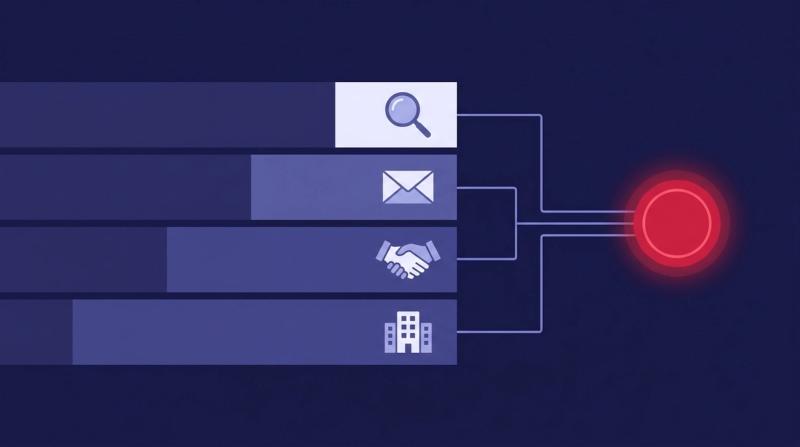
A SaaS marketing strategy decides who you sell to, which channels reach them, what you spend and how you measure it. The biggest choice is channels, and it should follow annual contract value (ACV). The ACV Channel Map splits SaaS into four bands: under $1k (self-serve: SEO for revenue pages, free trials, review sites, lifecycle email), $1k to $15k (product-led with sales assist: SEO and content, high-intent paid search, integration partners, webinars), $15k to $100k (sales-led: comparison and pricing pages, ABM, founder-led LinkedIn, review sites) and $100k+ (enterprise: ABM, field events, analyst relations, digital PR). SEO and AI search visibility sit underneath every band, because buyers check Google and ChatGPT whatever channel found them. Build the plan in six steps: a revenue goal, the buying committee, positioning, channels, budget and measurement. SaaS Capital's 2026 survey puts median marketing spend at 8% of ARR. Judge marketing on CAC payback, net revenue retention and pipeline by channel, not traffic.
Free Playbook
The exact 90-day playbook we run for clients

A SaaS marketing strategy is the plan for how a subscription software company wins and keeps customers. It sets which buyers to target, which channels reach them, how much to spend and which metrics prove it's working. The biggest decision is channel choice, and it should follow your deal size rather than whatever competitors happen to do.
Deal size matters because it caps what you can spend to win each customer. A $50-a-month tool can't pay for a sales team and trade shows. A $150,000 contract won't close from a free trial and a blog post. We built the ACV Channel Map below to match the two.
SEO and AI search sit under every band on that map, so this guide goes deeper on them than most. For the organic side in full, read our SaaS SEO guide alongside it.
What Is a SaaS Marketing Strategy?
SaaS marketing is marketing for software sold on subscription, where revenue arrives month by month and churn can undo a quarter of wins. A SaaS marketing strategy decides who you sell to, which channels reach them, what you spend and how you measure it. The subscription model changes the maths behind each of those choices.
How SaaS marketing differs from traditional B2B marketing
| Traditional B2B | SaaS | |
|---|---|---|
| Revenue | One large sale, then a service contract | Recurring revenue that can grow or churn every month |
| Buyer journey | Demo, proposal, contract | Trial or demo, onboarding, then expansion and renewal |
| Who you market to | The buyer | The buyer and the daily user, who are often different people |
| Success metric | Leads and closed deals | CAC payback and net revenue retention |
| Marketing's job ends | At the signature | Never: renewal is a sale too |
The last row changes the most. A SaaS customer can leave at renewal, so onboarding emails, in-app messages, customer stories and expansion campaigns all belong in the marketing plan, not just the acquisition channels.
The ACV Channel Map: Choosing SaaS Channels by Deal Size
The ACV Channel Map matches marketing channels to annual contract value (ACV), the average yearly revenue from one customer. It splits SaaS into four bands, from self-serve tools under $1,000 a year to enterprise deals above $100,000, and lists the channels each band can afford. SEO and AI search sit underneath all four.

The ACV Channel Map: channels by annual contract value
| ACV band | Sales motion | Lead with | Usually skip |
|---|---|---|---|
| Under $1k | Self-serve | SEO for revenue pages, free trial or freemium, review sites, lifecycle email | Outbound sales, trade shows |
| $1k to $15k | Product-led, sales-assisted | SEO and content, high-intent paid search, integration partners, webinars | Full ABM programs |
| $15k to $100k | Sales-led | Comparison and pricing pages, ABM on named accounts, founder-led LinkedIn, review sites | Broad paid social, freemium |
| $100k+ | Enterprise | ABM, field events, analyst relations, digital PR that earns AI citations | Freemium, high-volume blog content |
The logic is cost per customer. A self-serve tool at $600 a year needs customers who cost far less than that to win, which rules out a sales team and points to search, free trials, review sites and email. At $150,000 a year, a six-month ABM campaign aimed at 50 accounts can pay for itself with a single deal.
Plenty of companies sell in two bands at once, usually a self-serve plan and an enterprise tier. Run each tier through the map on its own. But keep the base layer shared: buyers at every price check Google and ChatGPT before they talk to anyone.
How to Build a SaaS Marketing Strategy in 2026
Building a SaaS marketing strategy takes six steps: set a revenue goal, define who buys, sharpen positioning, pick channels with the ACV Channel Map, set a budget and decide how you'll measure results. With a live product and some customer data, a first version takes two or three weeks. Revisit it every quarter.
1. Set a Revenue Goal, Then Work Backward
Start with new ARR, not leads. If the target is $1.2 million in new ARR at a $12,000 ACV, you need 100 new customers. At a 20% win rate that's 500 qualified deals in the pipeline, and the funnel maths tells you how many demos and visits each channel has to produce. That's your SaaS marketing funnel on one page.
2. Define Who Buys and Who Uses
In our experience, deals above about $15,000 a year involve a buying committee: a daily user, a budget holder, an IT or security reviewer, and often procurement. Write down what each one searches for and worries about. The user wants a faster workflow. The security reviewer wants your SOC 2 report.
3. Sharpen Positioning Before You Spend
Positioning is the sentence that says what you are and who it's for, in plain words, on your homepage. It matters for AI search too. The OppAlerts study of about 167,000 domains found homepage keyword alignment is the second-strongest AI visibility signal, at +0.204. Vague homepages get vague AI answers.
4. Pick Channels With the ACV Channel Map
Find your band, choose two to four lead channels from it, and give each one a full quarter before judging it. Spreading a three-person team across eight channels is the most common way we see early SaaS marketing plans stall. Depth in a few channels beats a thin presence everywhere.
5. Set a Budget From the Goal
Set the budget from the revenue goal, not from last year's number plus 10%. Work out what each channel costs per qualified deal, multiply by the deals you need, and compare the total with the benchmarks in the budget section below. If the gap is large, the goal or the channel mix has to change.
6. Decide How You'll Measure It
Pick metrics before launch: CAC payback and pipeline by channel for acquisition, and net revenue retention for the customers you already have. Report monthly and review the channel mix every quarter. The metrics table later in this guide lists the ones worth tracking.
Example: A SaaS Marketing Plan for a $12k ACV Company
Here's how those six steps turn into a first-year plan for a product-led company selling at about $12,000 a year, with two marketers and a freelance writer. The numbers are illustrative, so swap in your own. Notice how the slow channels start in the first quarter even though they pay off later.
Example SaaS marketing plan: $12k ACV, product-led with sales assist
| Quarter | Focus | Channels | Target by quarter end |
|---|---|---|---|
| Q1 | Fix the basics | Pricing and 3 alternatives pages, G2 profile, onboarding emails | Trial-to-paid rate measured by source |
| Q2 | Capture demand | High-intent paid search, 5 integration pages, monthly link building | 40 qualified deals a month |
| Q3 | Build authority | Topic cluster on the core problem, 2 partner webinars, best-of list placements | Brand named in ChatGPT for 5 buyer prompts |
| Q4 | Expand accounts | Expansion campaigns, customer stories, refresh of Q1 pages | Net revenue retention above 100% |
10 SaaS Marketing Strategies That Work in 2026
The SaaS marketing strategies that work in 2026 fit your deal size and compound over time. SEO and AI visibility lead this list because buyers use both at every price point, but paid and partner channels each earn a place in the right band. Here are ten, roughly from the cheapest to run to the most expensive.
SEO for Revenue Pages
Start with the pages closest to a purchase: pricing, "[competitor] alternatives", "X vs Y" and integration pages. They get less traffic than blog posts but far more demos per visit. Our guide to bottom of funnel keywords shows how to find the ones your buyers search.
“…your SEO still matters as much or more than ever before, it just won’t earn you traffic the way it once did.”
Content Marketing Sales Can Use
The best SaaS content answers what your sales team hears every week: how you compare, what setup takes, what it costs and who else uses it. Our opinion is that 4 excellent posts a month beat 20 mediocre ones, because AI models cite the single best answer. Our SEO content strategy guide covers the planning side.
AI Search Visibility
AI search sends little traffic but converts unusually well. Patrick Stox reported AI search was 0.5% of Ahrefs' visitors but 12.1% of its signups. In a B2B SaaS case study, Seer Interactive found ChatGPT visitors converted at 15.9% against 1.76% for Google organic.
SaaS brands start behind here. Profound's analysis of 11.84 billion citations found SaaS has the lowest earned-media share of any industry, at 11.4%, so third-party coverage is scarce and valuable. Our view: agencies that don't track AI citations alongside Google rankings in 2026 are already behind. Our AI SEO guide covers the tactics.
Review Sites and Comparison Lists
TrustRadius's 2026 survey of 1,862 tech buyers found 74% use reviews during a purchase, and 94% of buyers who used AI fact-checked what it told them. That puts G2, Capterra, TrustRadius and Gartner Peer Insights profiles in the plan, along with third-party "best X" lists.
Those lists pull more weight than they look. SAASY LINKS' analysis of 200+ listicle placements found pages featured in 3+ "best of" lists saw an average 47% organic traffic increase within 90 days. If you want help getting there, we can get you featured in best-of lists your buyers already read.
Paid Search and Retargeting
Paid search works when you bid on high-intent terms, like "[category] software" or competitor names, and send clicks to a focused landing page. It buys time while SEO compounds. In our experience, broad paid social rarely pays back below $15,000 ACV, because most of that audience isn't shopping.
Free Trials and Freemium
Below about $15,000 ACV, the product is often your best salesperson. A free trial or free plan lets buyers qualify themselves, and marketing's job shifts to getting them to the moment the product proves its value. Track activation rate, not just signups.
Lifecycle Email
Email turns signups into customers and customers into bigger customers. Set up onboarding sequences triggered by what users do in the product, then expansion and renewal campaigns. Once it's built, it's the cheapest channel here. In our audits it's also the one teams set up once and never revisit.
Integration and Partner Marketing
Every integration is a distribution channel. Give each one its own page and get listed in your partners' marketplaces. Integration pages also rank for searches like "connect HubSpot to Slack", which are high intent by definition, and partner co-webinars reach customers who already trust the other brand.
Account-Based Marketing
ABM targets a named list of accounts, usually 50 to 500, with ads and outreach built for them. Because the cost per account is high, it only pays off above roughly $15,000 ACV. Keep the list small enough that sales will actually work it, and agree on it together.
Founder-Led LinkedIn and Communities
Buyers trust people more than logos. In our experience, founders and subject experts posting on LinkedIn, or answering questions on Reddit, outperform brand accounts for reach. Our guide on how to use Reddit for marketing covers the rules that keep you from getting banned.
Communities feed AI answers too. SAASY LINKS' Reddit campaign for a project management tool produced 23 threads with real discussion, and within 3 months the brand appeared in Perplexity answers for "best project management tools", a query it had never ranked for in Google.
B2B vs B2C SaaS Marketing
B2B SaaS marketing sells to a company through several people over weeks or months, while B2C SaaS marketing sells to one person who can decide in minutes. That difference changes channels, content depth, pricing pages and how long you should wait before judging results. Most SaaS companies are B2B, so most advice assumes it.
B2B vs B2C SaaS marketing
| B2B SaaS | B2C SaaS | |
|---|---|---|
| Who decides | A buying committee | One person |
| Sales cycle | Weeks to 18 months | Minutes to days |
| Lead channels | SEO, comparison pages, ABM, review sites | App stores, paid social, referrals, SEO |
| Content | Deep: security, integrations, implementation, ROI | Short: benefits, social proof |
| Pricing page | Tiers, often "contact sales" for enterprise | Simple monthly and annual plans |
| Key metric | Pipeline and net revenue retention | Conversion rate and monthly churn |
If content is the gap, our B2B SaaS content marketing team builds the comparison, security and proof pages that buying committees read.
How Much Should a SaaS Company Spend on Marketing in 2026?
The median private B2B SaaS company spends 8% of ARR on marketing and 15% on sales, according to SaaS Capital's 2026 survey of more than 1,000 companies. Equity-backed companies spent 100% more on marketing than bootstrapped ones, because they're buying growth. Treat those numbers as a starting range for your SaaS marketing strategy, then adjust for your growth target.
Split the budget by band. Our recommendation: self-serve companies put most of it into SEO and product-led onboarding, while sales-led companies shift money toward ABM and sales enablement. Either way, hold back 10% to 15% for tests, so a new channel doesn't have to steal from one that's working.
SaaS Marketing Metrics That Matter
SaaS marketing metrics should connect spend to revenue, not just activity. The four that matter most are customer acquisition cost (CAC), CAC payback period, net revenue retention and pipeline by channel. Traffic and MQLs are useful inputs, but on their own they can't show whether marketing pays for itself.
SaaS marketing metrics worth tracking
| Metric | What it measures | How to calculate | Watch for |
|---|---|---|---|
| CAC | Cost to win one customer | Sales and marketing spend ÷ new customers | Blended CAC hiding one expensive channel |
| CAC payback | Months to earn back CAC | CAC ÷ (monthly revenue per customer × gross margin) | Payback longer than your average contract |
| LTV:CAC | Value of a customer vs its cost | Customer lifetime value ÷ CAC | Lifetime value guessed from too little churn data |
| Net revenue retention | Growth from existing customers | (Starting MRR + expansion − churn − contraction) ÷ starting MRR | Expansion masking high logo churn |
| Pipeline by channel | Which channels create deals | Deals created and their value, by first-touch source | Self-reported source missing from the CRM |
| Activation rate | Signups who reach first value | Activated users ÷ signups | Defining activation too loosely |
Reporting traffic instead of pipeline is one of the SaaS SEO mistakes we see most, and the same trap applies to every channel on this list.
What Doesn't Work in SaaS Marketing
Two common moves keep draining SaaS marketing budgets. Both look busy on a dashboard, and both attract people who were never going to buy, which is why they survive so long in monthly reports. We find at least one of them in almost every new client's plan, and fixing it frees budget straight away.
Targeting keywords your product doesn't solve is the first. Ranking for "what is CRM" when you sell email marketing software drives traffic that never converts. Match keywords to what the product actually does, not to search volume.
Posting promotional content on Reddit without context is the second. Reddit's spam filters and moderators remove self-promotional posts fast, and repeat offenders get shadow-banned, so their posts look live to them and invisible to everyone else. And the brand gets remembered for the wrong reason.
Frequently Asked Questions
What is SaaS marketing?
SaaS marketing is marketing for software sold on subscription. Because customers can cancel, it covers keeping and expanding customers as well as winning new ones.
What is the 3-3-2-2-2 rule of SaaS?
It's the T2D3 growth path: triple revenue two years in a row, then double it three years in a row. Neeraj Agrawal of Battery Ventures described it in 2015 as the curve many billion-dollar SaaS companies followed.
What is the rule of 40 in SaaS?
Your revenue growth rate plus your profit margin should add up to at least 40%. Brad Feld popularized it in 2015 for SaaS companies at scale, around $50 million in revenue and up.
How much should a SaaS company spend on marketing?
The median private B2B SaaS company spends 8% of ARR on marketing, according to SaaS Capital's 2026 survey. Venture-backed companies chasing fast growth often spend double that.
What is the best marketing channel for SaaS?
It depends on deal size. SEO and AI search work at every price point; beyond that, self-serve tools lean on free trials while deals above $15,000 a year lean on ABM.
What's the difference between a SaaS marketing strategy and a SaaS marketing plan?
The strategy picks who you target and which channels you use. The plan puts dates, owners, budgets and targets on that for the next quarter or year.
How do you build a B2B SaaS marketing strategy?
Start from a revenue goal and map the buying committee, then choose channels that fit your deal size. Above $15,000 ACV, comparison pages and ABM usually lead.

Written by
Co-founder & CEO of SAASY LINKS, the B2B SaaS link building and AI visibility agency. 10+ years in SEO and growth marketing for SaaS brands. Mentor at 500 Startups and Techstars. Runs the Backlink Masterminds community for link builders.
Get Your SaaS Ranked on Google & Cited by AI
Senior-led AI SEO combining strategy, content, editorial links, and AI optimization in 90-day sprints. Built exclusively for B2B SaaS.
Book a Free Consultation CallBuilt exclusively for SaaS.


