What Are Backlinks, and Why Do They Still Matter in 2026?

TL;DR
A backlink is a link from another website to a page on yours. Google treats each one as a vote of confidence, and its PageRank system, which still runs as a core ranking system, uses those votes to decide which pages deserve to rank. Backlinks matter just as much for AI search, because AI assistants pull their answers from pages that already rank. But a backlink only helps once it's live, crawled, counted and kept, which is why new links take weeks to show up and why lost links quietly cost you rankings. You can check your backlinks for free in Google Search Console's Links report or Ahrefs Webmaster Tools.
Free Playbook
The exact 90-day playbook we run for clients

Every page that ranks on Google's first page has something in common with almost every other one. Other websites link to it. Those links are called backlinks, and they're still one of the clearest signals Google uses to decide which pages deserve to be seen.
This guide answers the question of what are backlinks in plain English, with real examples and no jargon you'll have to look up. Once you've got the basics, our link building guide shows how to earn them on purpose.
What Are Backlinks?
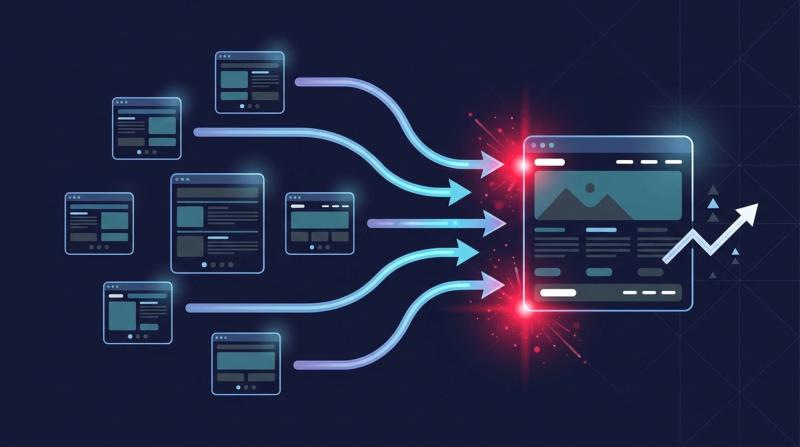
A backlink is a link on another website that points to a page on your website. If a tech blog writes about your product and links to your homepage, that's a backlink. They're also called inbound links or incoming links, and Google treats each one as a vote of confidence in the page it points to.
The idea goes back to Google's founding. Sergey Brin and Larry Page's 1998 Stanford paper described PageRank, a system that ranked pages partly by how many other pages linked to them and how important those pages were. A link from a page lots of people link to counts for more than a link from a page nobody links to.
What a backlink looks like in code
Under the hood, a backlink is a standard HTML anchor tag on someone else's page. It has three parts that matter for SEO: the URL it points to, the clickable anchor text, and an optional rel attribute that tells Google whether to count the link.
Here's a plain example: <a href="https://yoursite.com/pricing">project management pricing</a>. The href is your page. The words between the tags are the anchor text, which tells Google what your page is about. Add rel="nofollow" or rel="sponsored" and Google usually won't pass ranking value through it.
Dofollow vs nofollow backlinks
A dofollow backlink is simply a normal link with no rel attribute, and it passes ranking value. A nofollow backlink carries rel="nofollow", which asks Google not to count it. Most links on Reddit, Wikipedia, social profiles and blog comments are nofollow, which is why they help your visibility more than your rankings.
Don't write nofollow links off. They still send visitors, and people who find you through them sometimes link to you properly later. They just shouldn't count toward the links you're building to move a specific page.
Anchor text: the words inside the link
Anchor text is the clickable text of a backlink, and Google reads it as a clue to what your page is about. Natural profiles mix several kinds. A profile where most links use the same exact keyword looks built rather than earned.
Anchor text types, with examples for a project management tool
| Anchor type | Example | How it reads to Google |
|---|---|---|
| Branded | Acme PM | Natural; the most common anchor for real brands |
| Naked URL | acmepm.com | Natural, common in citations and directories |
| Descriptive | this project planning tool | Natural, adds topical context |
| Generic | click here, this post | Natural but carries little context |
| Exact match | project management software | Strong signal, but risky if overused |
Backlinks vs internal links vs outbound links
People mix these up all the time, because they're all just links. The difference is who owns each end. A backlink comes from someone else's site, which is why it carries more weight than a link you add yourself.
Backlinks compared with the other two kinds of links
| Link type | From | To | Who controls it | Brings new authority? |
|---|---|---|---|---|
| Backlink (inbound link) | Another website | Your website | The other site's owner | Yes |
| Internal link | Your website | Your website | You | No, it moves authority you already have |
| Outbound link (external link) | Your website | Another website | You | No, it sends authority out |
Backlink Examples From Real Sites
Most answers to what are backlinks stop at the definition, but examples make it click. Backlinks come in many forms, and most SaaS companies get their first ones from the same handful of places. They range from links you can claim in an afternoon to links you have to earn.
Common backlink examples for SaaS sites ("usually followed" reflects what we typically see; always check the page)
| Example | Where it appears | Usually followed? | What it's worth |
|---|---|---|---|
| Review site profile | Your listing on G2, Capterra or Product Hunt | Often nofollow | Brand visibility, referral traffic |
| Integration directory listing | A partner's app marketplace or integrations page | Varies by partner | Strong authority when followed |
| News citation | A journalist links to your data or quote | Usually followed | High authority and trust |
| "Best X" listicle mention | An article comparing tools in your category | Usually followed | Rankings plus buyers who are comparing |
| Guest post byline | Author bio on an article you wrote | Often followed | Moderate, depends on the site |
| Resource page link | A curated list of tools or guides | Usually followed | Small but relevant |
| Forum or Reddit mention | A thread where someone recommends you | Nofollow or ugc | Referral traffic, AI visibility |
A news citation and a Reddit mention are both backlinks, but they do very different jobs. Our guide to the types of backlinks sorts 20 of them by how much ranking value they pass and how risky they are.
Take two of those examples side by side. Your G2 profile is quick to set up and sits on a DR 91 domain, but the link is often nofollow and it's one of thousands of near-identical listings. A single mention in a "best project management tools" article that already ranks is harder to get. It's usually followed, it sits in the body of the article and it reaches people who are choosing a tool that week.
Neither is wrong. The review profile gives you a baseline presence and a place for buyers to check you out. The listicle mention moves rankings and sales. Most healthy link profiles have plenty of the first kind and a steady trickle of the second.
Why Backlinks Still Matter for SEO in 2026
Backlinks still matter because Google still uses them to rank pages. Google's own ranking systems guide says PageRank "has evolved a lot" since launch and "continues to be part of our core ranking systems." Pages without links are competing with one of Google's main signals switched off.
Backlinks also help Google find your pages in the first place. Google's own documentation says new pages "are discovered when Google extracts a link from a known page to a new page." A new page that nothing links to, from your site or anyone else's, can take weeks to be found.
The traffic data points the same way. Ahrefs' study of around 14 billion pages found that 96.55% of them get zero traffic from Google, and that pages with more referring domains get more traffic. Content alone rarely gets a page into the results that people click.
Not every link counts equally, though. A link from a site your buyers read, placed inside an article about your topic, does far more than a link buried in a footer on an unrelated blog. And because Google has spent 25 years getting better at spotting links that were bought or faked, the gap between good links and cheap ones keeps widening.
Do Backlinks Matter for AI Search?
Yes. AI assistants like ChatGPT, Perplexity and Google's AI Overviews build answers from pages that rank, and backlinks help pages rank. The OppAlerts study of about 167,000 domains found Domain PageRank, a direct measure of link authority, correlates at +0.192 with AI citations.
Brand mentions matter here too, even without a link. AI models learn which brands belong in a category by seeing them named on pages about that category.
“Mentions matter more than backlinks.”
We'd go further. Unlinked brand mentions on DR 30+ sites are more valuable than linked mentions on sites nobody reads. The mention itself is the signal, and the link is a bonus. So when you judge a backlink in 2026, count the visibility it brings, not just the ranking value.
What Makes a Backlink Good or Bad?
A good backlink comes from a real site with real readers, sits inside relevant content and passes ranking value to a page you care about. A bad one comes from a site that exists to sell links, sits in a footer or comment, or points to a page that no longer exists.
How much value passes through a link is called link equity, and it depends on the linking page's own authority, the link's attributes and how many other links share the page. For a full checklist of what separates strong links from weak ones, see our guide to high quality backlinks.
Attributes are the part most beginners miss. Google has treated nofollow, sponsored and ugc as hints since March 2020, so those links usually pass no ranking value. And since its December 2022 link spam update, Google's SpamBrain system neutralizes links from sites that buy or sell them.
The Backlink Lifecycle: When a Link Starts (and Stops) Helping
The Backlink Lifecycle has four stages a link must clear before it helps you rank: Live, Crawled, Counted and Kept. A link can stall at any of them, which is why new backlinks usually take 4 to 12 weeks to show an effect and why lost links cost rankings without warning.

Live is the easy part: the link is published. Crawled takes longer, because Googlebot has to revisit the linking page. A page on a busy news site gets crawled within hours, while a page nobody links to can sit unvisited for weeks.
Counted is where Google decides whether the link passes value. Nofollow and sponsored links, and links from sites SpamBrain has flagged, stop here. You'll still see them in backlink tools. They just don't help.
Kept is the stage most people forget. SAASY LINKS audited 60 SaaS domains in 2026 and found that 18% of their referring domains pointed at URLs that returned a 404 or passed through two or more redirect hops. Those links were live and counted once. Then the pages they pointed to moved.
How to Check Your Backlinks for Free in 2026
Once you know what are backlinks, the obvious next question is which ones you already have. The quickest free way to see them is Google Search Console's Links report, which lists your top linking sites and the pages they point to. Ahrefs Webmaster Tools is free for sites you own and adds anchor text and follow status.
Look at referring domains, not total backlinks. A single site with a link in its footer can create 1,000 backlinks, one on every page, but it's still one referring domain. Profiles that look big on backlink count are often thin once you count the sites behind them.
Then check where your links point. Sort by linked page and look for URLs that return a 404. One project management SaaS had 41 referring domains pointing at feature pages it deleted in a redesign; SAASY LINKS redirected those URLs to the live pages, and the main features page climbed from position 19 to 7 in five weeks without a single new link.
How Many Backlinks Does a Page Need?
There's no fixed number of backlinks a page needs. It depends on how many referring domains the pages already ranking for your keyword have. A low-competition keyword might need five good links. A crowded one like "project management software" can need hundreds, which is why most SaaS companies start with narrower keywords.
The practical method is to look up the top five results for your keyword, note their referring domains, and aim for the lower end of that range with links of similar quality. Our guide on how many backlinks you need to rank walks through that method with worked examples.
How to Get Your First Backlinks
Start with the links you already qualify for: review site profiles, integration directories and partner pages. They don't depend on authority, so they work on a brand-new site. Our guide on how to get backlinks sorts 12 tactics by the stage your site is at.
After that, earn links with things other sites want to cite: original data, a free tool, a strong opinion backed by numbers. Pitch "best X" listicles in your category and write guest posts for sites your buyers actually read. It's slow at first. But each link makes the next one easier, because sites link more readily to brands they've seen cited elsewhere.
Paying for links is common, and it's where most beginners get burned. If you're considering it, read our guide on how to buy backlinks without a penalty first. And if you'd rather have editorial backlinks built for you, our SaaS link building team shows every live URL before it's billed.
Frequently Asked Questions
What is a backlink in simple terms?
A backlink is a link from someone else's website to yours. Search engines treat it as a vote of confidence, so pages with more good backlinks tend to rank higher.
What is an example of a backlink?
If a SaaS review blog writes "the best CRM for startups" and links the name of your product to your homepage, that's a backlink. So is your listing in a partner's integration directory, or a news article that links to your survey data.
Are backlinks still relevant in 2026?
Yes. Google says PageRank is still part of its core ranking systems, and AI assistants cite pages that already rank well. Backlinks are still one of the strongest signals for both.
How many backlinks do I need to rank?
It depends on who you're competing with. Check how many referring domains the pages in the top five have for your keyword, and aim to match the lower end of that range with links of similar quality.
Can backlinks hurt my site?
Rarely. Google ignores most spammy links on its own, so random low-quality links usually do nothing. Real damage comes from deliberately buying or trading links at scale, which can lead to a manual action.
Do I have to pay for backlinks?
No. Many good backlinks are free, like review profiles, partner listings and links earned from original data. Paying an agency for the work is common, but paying a site owner for a followed link breaks Google's rules.
What's the difference between a link and a backlink?
Every backlink is a link, but not every link is a backlink. It's only a backlink from your point of view when it sits on another website and points to yours.

Written by
Co-founder & CEO of SAASY LINKS, the B2B SaaS link building and AI visibility agency. 10+ years in SEO and growth marketing for SaaS brands. Mentor at 500 Startups and Techstars. Runs the Backlink Masterminds community for link builders.
Get Your SaaS Ranked on Google & Cited by AI
Senior-led AI SEO combining strategy, content, editorial links, and AI optimization in 90-day sprints. Built exclusively for B2B SaaS.
Book a Free Consultation CallBuilt exclusively for SaaS.